
Who Does What at a Trade Show? Understanding the Teams Behind a Successful Exhibit
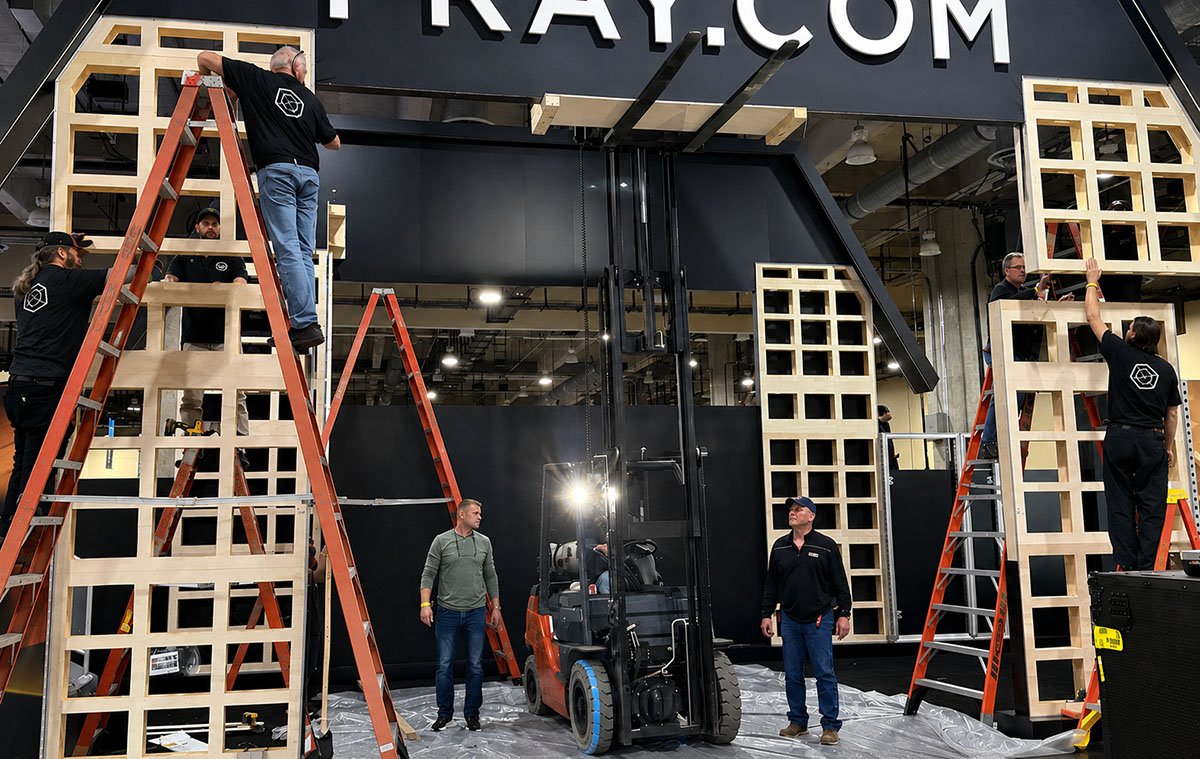
Trade shows are full of moving parts, and if you're new to exhibiting, the terminology alone can feel like learning a new language. General Contractor. Exhibit House. EAC. Drayage. Rigging. Material handling.
Who are all these people, and who is actually responsible for what?
The good news is that you don't need to become a trade show expert overnight. Understanding the key players and a handful of common terms can make planning your next event much smoother, help you avoid surprises, and make working with your partners a whole lot easier.
Let's break it down.
Meet the Three Teams That Make It Happen
Every successful exhibit relies on three primary players. While they often work together, each has a very different role.
The General Contractor (GC)
Think of the General Contractor as the company responsible for managing the event itself. Companies like Freeman, GES, and Shepard are hired by show management to oversee the logistics of the exhibition and keep everything running smoothly.
They're typically responsible for:
Managing the show floor
Coordinating with show management
Installing aisle carpet and show signage
Assigning move-in and move-out schedules
Coordinating freight and material handling
Managing labor and on-site logistics
Coordinating venue services such as electrical, internet, plumbing, and rigging
Operating the exhibitor service desk
If you've ever ordered booth services or needed assistance during move-in, chances are you worked through the General Contractor.
The Exhibit House
This is the team that brings your booth to life.
An exhibit house designs, engineers, fabricates, and manages your exhibit from concept to completion.
An exhibit house typically handles:
Booth design
Engineering and fabrication
Graphics production
Project management
Shipping coordination
Installation planning
Storage and refurbishment between shows
A great exhibit house also works closely with the General Contractor and the venue to coordinate electrical requirements, booth layouts, drayage, and other billable services so everything is ready before installation begins. Their role is to keep every moving piece organized long before your booth reaches the show floor.
Learn more about our Exhibit Services and browse our Portfolio to see our work in action.
The Exhibitor Appointed Contractor (EAC)
An Exhibitor Appointed Contractor, or EAC, is an independent installation company hired directly by the exhibitor to install and dismantle their booth instead of using labor arranged through the General Contractor.
While some exhibit houses also provide EAC services, they must meet the venue's insurance requirements and, in many cities, maintain the appropriate union agreements to perform installation work.
An experienced EAC provides:
Knowledge of venue rules, union regulations, and local requirements
Experienced labor partners at convention centers nationwide
Strong relationships with labor providers and venue teams
Consistent installation quality from city to city
A dedicated partner focused on your exhibit from move-in through move-out
For exhibitors traveling from city to city, an experienced EAC helps ensure every installation runs efficiently while navigating the unique requirements of each venue.
Trade Show Terms You'll Hear All the Time
Trade shows come with their own vocabulary. Here are a few of the most common terms you'll encounter.
Drayage (Material Handling)
The service of moving your freight from the loading dock to your booth and back again after the show.
Rigging
Anything suspended from the ceiling, including hanging signs, lighting trusses, or overhead structures.
Union Labor
Many convention centers require specialized union labor for certain types of work. Depending on the venue, different unions may handle electrical work, carpentry, rigging, forklift operation, and other installation services.
Electrical & Internet
Electrical and internet services are typically provided through the venue or its designated service providers. Depending on the convention center, specialized unions may handle electrical work, while other trades such as carpentry, rigging, and forklift operation are often assigned to their own unions.
Advance Warehouse
A warehouse where exhibitors can ship materials before the show opens, allowing freight to arrive ahead of move-in.
I&D (Installation and Dismantle)
The labor required to install your booth before the show opens and dismantle it afterward.
Why Understanding the Process Matters
Knowing who does what helps every project run more smoothly.
When responsibilities are clear, communication improves. Budgets become easier to understand. Timelines stay on track. Most importantly, your team can stay focused on preparing for the show instead of trying to solve last-minute logistical questions.
The best exhibits are built on collaboration. The General Contractor manages the event. The Exhibit House designs and prepares your exhibit. The Exhibitor Appointed Contractor ensures your booth is professionally installed while meeting the requirements of the venue.
Understanding who owns each piece of the process helps eliminate surprises and makes your exhibiting experience far less stressful.
Let Wise Owl Handle the Details
You don't have to memorize every trade show term or coordinate every moving part on your own. That's what we're here for.
From booth design and fabrication to project management and installation planning, Wise Owl works alongside General Contractors, venues, and trusted installation partners every step of the way so you can focus on making the most of your event.
Ready to simplify your next exhibit?